 Chapel of our lady of hope
"Great little women": Sisters Maria Javier and Guillermina
Don't look for it…this story isn't in the Gospel, but it's full of Gospel…It's the story of two seeds that one ordinary morning were placed in the hands of the Sower…
Their names? Sister Maria Javier and Sister Guillermina.
We know little or almost nothing about their lives before they arrived in Argentina.
To the voice that inspired them: “Whom shall I send?”, they replied: “Send me”…
They generously left their homelands, Spain and Portugal, and arrived in Argentina in 1912. They began their mission at the Coronda Hospital, working and serving their brothers and sisters as nurses.
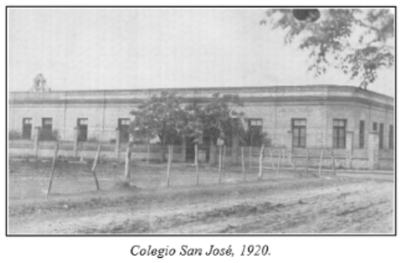 The years went by…The year was 1919… A dark cloud hung over the town of Totoras. A terrible plague began to ravage the town, causing great devastation. The scene was utterly bleak. The hospital, which had not yet been inaugurated, had to be set up to care for those afflicted by the disease. The deceased could not be mourned or taken to the cemetery through the town's streets for fear of contagion.
The plague had already claimed so many victims that the only doctor at the hospital could no longer manage on his own. It was then that he turned to the "San José" School, run by the Franciscan Missionaries of Our Lady, to ask for the help of two sisters.
“If a grain of wheat falls into the earth and does not die…it remains alone. But if it dies…”
These words of Jesus resonated deeply in the open furrow of two hearts ablaze with love…Yes!…Once again it was the voice of the Lord: “Whom shall I send?”
Who will go? To ask or to appoint?… And thousands of questions and doubts pierced the heart of the good Sister Superior. She turned to prayer…Then she gathered her sisters and explained the request…There was a great silence…
Sister Maria Javier: 62 years old…Sister Guillermina: 39 years old…
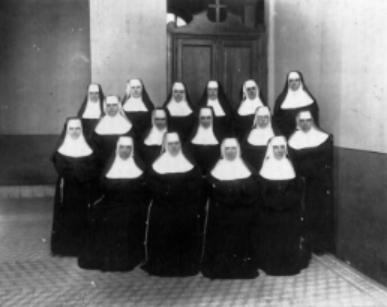
Two lives and a single response: HERE WE ARE, LORD! SEND US! They volunteered, as all the other sisters in the community had done. They said goodbye to their sisters, knowing that as a safety measure, they would not be able to return to the community while serving in the hospital. On October 20, 1919, they entered the hospital to care for their brothers and sisters, alleviate their pain, comfort them, and prepare them for their departure to the House of God the Father. The work was arduous and exhausting, day and night, with the constant threat of infection… Despite everything, they went about diligently, healing one, comforting another, helping everyone to offer their sufferings to Him who suffered so much for us. From that day on, they never saw any of their sisters again; a wall stood between them…And so the days passed; The bubonic plague (transmitted by rats) was claiming more lives every day…
One morning, Maria Javier noticed the unmistakable signs: she was sick. She stayed in bed for a few days, and still convalescing, she went back to work to serve Jesus in her suffering brothers and sisters, and also Guillermina, who had contracted the terrible disease.
Weak and feverish, Maria Javier did not falter; an inner strength sustained her, compelling her to visit the sick and spend the nights with the dying…
Sister Guillermina, exhausted by the illness, could no longer regain her strength and became bedridden with fever. The same happened to Sister Maria Javier a few days later. In utter destitution, poor and far from their sisters, they offered up their lives.
Knowing the sisters' condition, the superior insisted repeatedly on seeing them, even at the risk of contracting the disease herself, until, after many refusals, her request was finally granted. What an encounter that was! There were few words… For in life's greatest moments, the most eloquent language is silence. And there was a meeting, which was a farewell.
– “Don't worry, sisters… We are going to LIFE… This evil will soon end. Until we meet again… Until we meet in heaven… Now more than ever we are happy.”…
A few more days passed… The warm sun of the approaching summer had ripened the crops, and the harvest was near. Promising ears of grain announced the white flour for the bread that satisfies the hunger of humankind… Ears of grain that would later become a Host of Love…
Yes, God, Sun of LOVE, had ripened these two sisters, ears of grain brimming with a life given only to HIM and to their brothers and sisters… It was harvest time.
On November 13, 1919, the two died three hours apart… And that evening, as the sun hid behind the clouds, it painted the sky the color of martyrs, the color of love…
Due to the circumstances and out of prudence, as we mentioned at the beginning, the deceased were not usually given wakes and were taken to the cemetery via a road far from the town. But this was not the case with them. The townspeople refused… And so the streets were filled with residents who came to bid farewell to those who had made the Master's words a reality: “Greater love has no one than this: to lay down one’s life for one’s friends.” (John 15:13).
And when these two lives were extinguished, the light of hope was rekindled… The two seeds died, and life began to bloom… María Javier and Guillermina had offered their lives so that the plague would end. Indeed, they were the last two to die. The patients gradually recovered, and the desolation became a thing of the past.
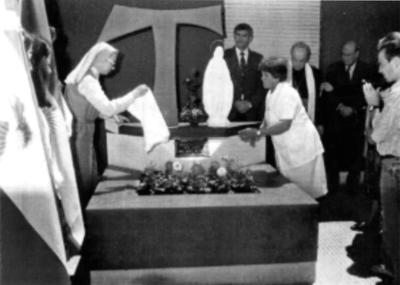 María Javier and Guillermina had a boat and a net…of dreams, of hopes, of projects…but one day Jesus passed by their side and said to them: “Leave your nets…come with me.” And they, seduced by the Master’s gaze and voice, left everything and followed in his footsteps…Since that time, the entire town of Totoras has paid homage to them as “the martyrs of charity.”
To learn more, visit the website of the Argentine region of the Franciscan Missionaries of Our Lady: https://fmnsarg.com.ar/hermanas-maria-javier-y-guillermina/
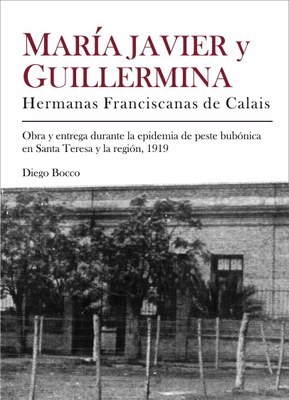 You can also consult the book “María Javier y Guillermina: Hermanas Franciscanas de Calais” written by Diego Bocco.