 Chapel of our lady of hope
Self-denial
We cannot address this question without first establishing a foundation: Wonder and Mercy. But the Franciscan experience also shows us that self-denial is an integral part of it. Wonder and Mercy call for self-denial, and we can only experience the latter by having experienced the first two.
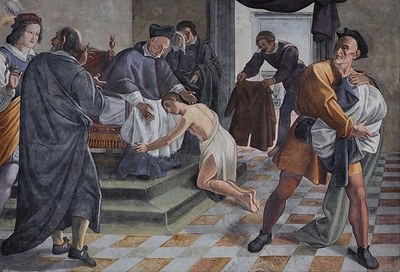
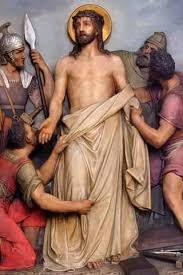
These three elements run throughout the Bible:
In the Old Testament, let us take as an example Abraham and Sarah, to whom God shows Mercy by granting them a son. Sarah declares, filled with wonder: “Who would have said to Abraham that Sarah would nurse children? Yet I have born him a son in his old age” (Ge 21, 7). According to the same chapter, verse 5, Abraham was 100 years old. Sarah, 90 years old, according to chapter 17, verse 18.
The stripping away will soon be announced when God asks Abraham to sacrifice his son Isaac (Gn. 22, 1-2).
In the New Testament, it is Jesus. Saint Paul writes in his letter to the Philippians: “But he made himself nothing, taking the form of a servant, being born in the likeness of men. And being found in appearance as a man” (2, 7).
From the Garden of Gethsemane to his death on the cross, Jesus lived this stripping away. In Gethsemane, he cried out, “Father, if you are willing, take this cup from me” (Lk. 22, 42). And on the cross, is it not a feeling of failure that dwells within Jesus, and therefore a complete stripping away of himself in the hands of God: “My God, my God, why have you forsaken me?” “(Mt. 27, 46). A cry of distress and a feeling of abandonment. And what can he do but place himself entirely in the hands of his Father: “Jesus cried out with a loud voice, ‘Father, into your hands I commit my spirit’” (Lk. 23, 46).
Paul invites Christians to take the same step: “This is a matter of putting off your former way of life, which is corrupted by its sinful desires” (Eph. 4, 22).
“But now you also must put off all of these things: anger, rage, malice, slander, and filthy language from your mouth.” No more lying among yourselves: you have put off the old self with its practices and have put on the new self, which is being renewed in knowledge in the image of its Creator. (Col. 3, 8-10)
And who is this new person? “Since you have been chosen by God, sanctified and loved by him, clothe yourselves with compassion, kindness, humility, gentleness, and patience. Bear with one another and forgive one another if any of you has a grievance against someone else. Forgive as the Lord has forgiven you. And over all these virtues put on love, which binds them all together in perfect unity. And let the peace of Christ rule in your hearts, to which indeed you were called in one body. And be thankful” (Col 3, 12-15).
God shows us mercy by choosing us; this is reason enough to marvel and give thanks. At the same time, we must put off our old selves, which is painful but leads to joy and profound peace.
Francis’s experience can help us with this.
Let us begin with wonder.
Francis is filled with wonder at God.
Francis's wonder and complete dependence on God can only be explained by this fascination, which is of a mystical nature (mysticism being this very strong feeling, the certainty, of God's presence in my life). In his praises of God, Francis uses a multitude of names to characterize God and expresses his fascination and thanksgiving in many ways:
"You alone are holy, Lord God, you who work wonders.
You are strong, you are great, you are the Most High, you are the Almighty…
You are the only good, you are all good, the supreme good…
You are joy, you are our hope and our joy…"
But where does this feeling come from?
1. It is not simply a matter of temperament:
It is true that he is someone who needs to radiate energy, to be seen, that he is a sociable person, who needs others to exist. Remember his youth and try to imagine him. He had been elected by the youth of Assisi to be their king.
He is someone full of sympathy, kindness, rather artistic, a poet, a musician, a bit like the troubadours.
… but to experience as sweetness what he found abhorrent: “When I was still in sin, the sight of lepers was unbearable to me. But the Lord led me among them; I had mercy on them ; and on my return, what had seemed so bitter to me was changed into sweetness for both mind and body” (Test. 1b-3a).
… to praise Brother Sun, Sister Moon, Brother Fire, Brother Wind, and even Sister Death
…to celebrate perfect joy (Fioretti 8)
there is still Something like an abyss – and what will help him cross it is his mystical experience.
2. Nor is it Simply that everyone is beautiful, everyone is kind either through naivety, or through a kind of foolish beatitude, or through a lack of experience. It is a much more positive and much deeper approach that stems from the inherent Goodness of God: in every human being there is “a princely potential,” both as a condition and as a destiny. Generally, when we speak of equality, it is in terms of levelling down. For Francis, the levelling is upward : in everyone, by the grace of the King of kings, there is a princely condition and destiny.
3. But when we speak of wonder, we must immediately speak of praise and thanksgiving.
Wonder concerns the person experiencing this feeling. Praise and thanksgiving concern the person to whom this feeling should be expressed, to whom we should express our gratitude.
However, the two are not necessarily linked : one can experience wonder and not know to whom to thank. Chesterton writes that the worst moment for an atheist is when they experience sincere gratitude and have no one to thank.
From wonder before God the Savior to wonder before God the Creator
We cannot avoid an important question if we want to understand Francis. Let us try to imagine Francis's journey, the phases he went through from his youth to his conversion, and the long years that followed. What happened to him ?
You might say : he experienced God. Yes ! It is true that he went from being an average Christian, for whom God exists but is distant, to being a believer. But what kind of God did he experience ? What face of God did he see ?
Francis, first of all, experienced salvation ; he was amazed that God saved him, that He showed him mercy. Only later was he amazed by another aspect of God : the Creator God. At first, he overflowed with gratitude because God saved him. Then, he overflowed with gratitude because he saw God as the source of everything.
Francis, amazed by the Savior God
In his youth, what characterized him was his thirst for glory. What he aspired to was the glory of chivalry. He dreamed of climbing the social ladder, of attaining the rank of nobility through heroic deeds and a distinguished chivalric career. But then, in the war between Assisi and Perugia, he was taken prisoner and spent a year in captivity. Biographers tell us that he struggled to recover. This was his first setback, a first step in this process of dispossession. Sometime later, he equipped himself to go and fight in Apulia alongside Walter of Brienne, in the service of the Pope. But in Spoleto, he had a dream that urged him to return home. His certainties were shaken. A second setback and a second step in dispossession. It was a dead end, a black hole, a depression that would last for more than a year. Why ? Because he returns to Assisi looking utterly ridiculous. He needed others to exist, he needed Glory, he needed chivalry : he has made a fool of himself. His ideal is shattered. He no longer exists for anyone.
His old friends pull him out of his despair. He organizes a celebration, and afterward, Francis lets the others pass him by, and he is found in a state of ecstasy. He will later say that if they had wanted to tear him to pieces, he would not have moved a muscle : he had just experienced the gentleness of God. God makes him feel the tenderness of a presence. That is the turning point. From then on, he experiences that he is saved, freely, by pure grace.
After his pilgrimage to Rome and his encounter with the leper, Francis withdrew more and more to deserted places until one day, in the chapel of San Damiano, he heard a voice from the crucifix saying to him, “Go, and repair my house, which, as you see, is falling into ruin.” The mystery of the cross became a reality for him, and within him was born a gratitude, a wonder before this Father who gave us such a Son, who went as far as to die on a cross to save us.
Then came the self-denial before his father at the bishop's tribunal.
B) Francis in awe of the Creator God
Francis marvelled at the miracle of existence, spontaneously tracing things back to their source. It was the feeling of the gratuitousness of things, of being, of beings. To the very end, he would see God the Father, the all-powerful Creator, from the perspective of Beauty and Goodness, of which creatures are the reflections. “In everything,” writes Celano (2, 165), “he admired the Maker… He rejoiced in all the works that came from the hand of God, and from this spectacle that brought him joy, he traced his way back to the One who is the cause… He knew how to contemplate the Most Beautiful in a beautiful thing ; everything good he encountered sang to him : ‘He who made me, He is the Most Good.’” And a little further on : “For the Goodness that is at the source of all things and that will be one day, wholly present in all things, even in this life, appeared to the saint, wholly present in all things.”
For Francis, everything is a symbol of the Triune God and sings of His Glory. Saint Bonaventure, in LM 9, 1, writes : “…he followed in the footsteps of his Beloved in every place of His creation, using the whole universe as a ladder to climb up to reach Him who is all desirable. In each creature, as in so many offshoots, he perceived with extraordinary piety the unique outpouring of God’s goodness, and as if the harmony pre-established by God between the natural properties of bodies and their interactions seemed to him like celestial music, he exhorted all creatures, in the manner of the prophet David, to praise the Lord.”
A pebble, for Francis, tells him something of God: it is hard, it is resilient, it is strong. In the Bible, we say of God: “You are my Rock.” When he saw an earthworm, he picked it up because he remembered what is said of the Lord in the psalm (21, 7): “I am a worm and not a man.”
This rather original attitude of Francis would give rise to a Franciscan school of thought. Saint Bonaventure would say that all of creation sings the Glory of God unconsciously, but man, who is one element of creation, has a priestly role to fulfil. He is made to express, consciously, for himself and for the unconscious creation, praise.
It must be added that for Francis, creation is not a past event. It is a present, ongoing action of God the Creator: “Let us all love the Lord our God with all our heart, with all our mind, with all our desire… He has given us and gives us all body, soul, and life… He has done and continues to do us only good” (1 Ki 23, 8). This too is a cause for wonder and praise.
C) Identification with Christ
In the Gospel of the feast Saint Matthias, heard at the Portiuncula, Francis discovers a living path to salvation. He discovers the human condition of the poor Christ and exclaims: “This is what I want, this is what I seek, this is what I long to accomplish with all my heart” (1 C 22).
What I want: no money, no bread, no bag, no staff, no shoes, no two tunics.
Another object of admiration is found in Admonition 5:
“Consider, O man, the degree of perfection to which the Lord has raised you: he created and formed your body in the image of the body of his beloved Son, and your spirit in the likeness of his spirit.”
We were created in the image and likeness of the Son. At the same time, the primacy of Christ in creation illuminates his gaze with wonder.
From this point on, Francis sought to conform his life to that of Jesus. To do so, he approached history from its end. Jesus died for us; I want to die for him. This was the constant desire of the martyr that dwelt within him. It would be granted in two ways: on the one hand, the stigmata, and on the other, his crucifying illness. I quote from the Legend of Perugia 43: “Francis, rejoice in the midst of your sufferings; from now on, live in peace as if you already shared in my Kingdom,” Jesus told him. But in the meantime, the Fioretti recount this text, humanly masochistic, of “Perfect Joy” (Fioretti 8).
To explain that this pinnacle of perfect joy for Francis was precisely the pinnacle of abjection, a third element must be added.
What Francis aimed for above all was to be able to resemble Jesus even in his flesh. To be a copy of Jesus. This explains his theme of Perfect Joy. It is the joy of being able to identify with the suffering Christ. Identification with the Son whom the Father gave us. In other words, to resemble him, not only in one's feelings but also in one's flesh, is the greatest grace that God can bestow.
The various episodes recounted in this passage from the Fioretti are found in the life of Jesus. “He came to his own, and his own people did not receive him…” says the prologue of Saint John. The Pharisees, the priests, the scribes rejected his preaching. He was called a false prophet. He was mistaken for someone else. There was a desire to exclude him, to exterminate him: “…if he comes out with a knotted staff and strikes us with it…” This is quite telling. At the moment of his death, he is abandoned by all, denied. The summit of love is the Cross.
This passage also refers to a crucial episode in Francis's life: his crisis with the Order. We read in 2 Celano 145:
“I would not consider myself a Franciscan friar if I were not in this state of mind; I am the superior of my brothers, I go to chapter, I preach, I give my opinions, and when I have finished, I am told: ‘You are not what we need; you are illiterate, contemptible; we do not want you as our superior because you have no eloquence, you are simple and narrow-minded.’ And I am shamefully expelled, burdened with universal contempt. Well, I tell you, if I do not accept all this with the same stoicism, with the same inner joy, and while maintaining my unwavering commitment to sanctification, I am not, not at all, a Franciscan friar.”
We have the exact transcription of this in the Legend of Perugia 114:
“As Blessed Francis was at the General Chapter of Saint Mary of the Portiuncula, called the Chapter of the Mats, which was attended by five thousand friars, several of them, wise and learned men, went to the cardinal, the future Pope Gregory, who was present at the Chapter. They asked him to persuade Blessed Francis to follow the advice of the learned friars and to allow himself to be guided by them…”
Francis shared in the cross of Christ, but even more, in the very heart of his distress and misery, he was joined by Jesus. His experience became a place of encounter with love. This experience became the place of an inner conformity to the disposition of Jesus who “emptied himself, taking the form of a servant, being born in the likeness of men and being born in the likeness of men. He humbled himself, being obedient unto death, even death on a cross” (Phil 2, 19).
This episode in Francis's life allowed him to experience and deepen his understanding of the Son's agony: the Father's absence and the feeling of failure. Through this experience, Francis felt called to follow Christ to the very end. Christ had died. He had surrendered himself to his Father in total self-denial, in total dispossession. He had accepted defeat. It was up to him, Francis, to embark on this human and spiritual journey. This mystical journey. He did not yet know exactly what it meant to be made like the Lord, nor how far it could go. But he had to follow him to the end. It was no longer enough to be poor like him, good like him on the roads. It was no longer enough to withdraw like him to deserted places for this intimate encounter with the Father. He had to take a decisive step with him toward a mysterious death that opens the way to life. He had to walk with him along a path of renunciation, of dispossession, of letting go, which leads into the world of the resurrection. Accepting this, he discovers another certainty: “God is, that is enough.” Through this discovery, he can hear that merciful voice telling him: “Poor little man; learn then that I am God and cease to trouble yourself forever. Is it because I have appointed you shepherd over my flock that you must forget that I am the chief shepherd? I chose you expressly, simple man, so that it would be manifest to all that what I do in you is not due to your skill, but to my grace. It is I who called. It is I who guards the flock and shepherds it. I am the Lord and the Shepherd. It is my business. Do not be troubled then” (Eloi Leclerc, Wisdom of a Poor Man).
We know what followed: Francis received the grace of conformity through the reception of the stigmata, and his wonder before God the Creator is sung in the canticle of Brother Sun.
Dispossession, total stripping away even in death, since he welcomes her as a sister and asks to die naked on the bare earth.
And how can we, today, follow Christ in the manner of Francis of Assisi?
The steps are successive.
The first is to be with Christ, and to let him be with us on our daily lives, as men and women. To try to live like him. To follow him by looking at him, by listening to him. But then comes the moment when a stumbling block makes us stumble. And there we stop. This is what we might call an external companionship. Everything was going in line with our human perspectives. To stop or to take with him a decisive step toward a mysterious death that opens us to life. We must pass with him along a path of renunciation, of dispossession, of stripping away that leads us into the world of the resurrection.
The second stage, therefore, involves a transformation of the deepest part of our being: “Do you not know that all of us who have been baptized into Christ Jesus were baptized into his death? Therefore, we were buried with him through baptism into death in order that, just as Christ was raised from the dead through the Glory of the Father, we too might live a new life. For if we have been united with him in a death like his, we shall certainly also be united with him in a resurrection like his” (Ro 6, 3-5).
One might now think that it would be enough, in order to follow Christ, to identify, individually, with his being, by way of his death. Now, this is the third stage. Paul, while granting us access to this profound understanding of the mystery of conformity, of identification with the being, life, and historical destiny of Christ, reveals that this is not all, that individual identification does not exist without participation in the growth of the body of Christ.
Following Christ is not merely living with him on an outward journey, nor is it simply accomplishing individually this inner and mystical passage through his death to rise with him, but rather it is integrating oneself into his growing being “until we all reach unity in the faith and in the knowledge of the Son of God, to mature manhood, to the stature of the fullness of Christ” (Eph 4, 13), when all will be gathered together in him, when all being and all things will be recapitulated in him. Thus, all creation, “also set free from its bondage to decay, to the glorious freedom of the children of God. We know that the whole creation has been groaning as in the pains of childbirth right up to this day.” (Ro 8, 21).
Ultimately, if we wish to follow Christ, it is not only a matter of being mystically united to him in an individual union, but also of participating in this immense birthing of all creation, knowing ourselves to be members of a body, the Church, which is the growing body of Christ, charged with leading all creation toward its fulfilment and completion.
To follow Christ is ultimately, through a mysterious assimilation to his being and his life of love, through the Paschal Mystery of a death that is the source of life, to contribute our stone to the building of the world in him and to understand our work, our loves, our friendships, our home, our social and political commitments, as being finalized by the coming of Christ and therefore as grounds for the growth of Christ himself.
All this can only be lived and accomplished through the acceptance of letting go, of relinquishing our own needs for the Glory of God and the salvation of the world.
February 2026
Brother Joseph Banoub (OFM)